A visitor's guide to the Welsh words and phrases you'll encounter across North Wales — from road signs and place names to greetings, food, and everyday conversation.
Visiting North Wales? You'll see and hear Welsh everywhere — on road signs, shop fronts, menus, and in conversation. Welsh (Cymraeg) is one of Europe's oldest living languages and is spoken proudly across North Wales. Here's your essential guide to the words and phrases you'll encounter.
Greetings & Everyday Words
These are the words you'll hear most often — try using them yourself!
| Welsh | English | Pronounced | |---|---|---| | Bore da | Good morning | bor-eh dah | | Prynhawn da | Good afternoon |prin-hown dah | | Nos da | Good night | noss dah | | Helo / S'mae | Hello | hell-oh / s-my | | Diolch | Thank you | dee-olch | | Os gwelwch yn dda | Please | oss gwel-ookh un tha | | Da iawn | Very good / Great | dah yaw-n | | Ie / Ydy | Yes | yeh / uh-dee | | Nage / Nac ydy | No | nah-geh / nak uh-dee | | Hwyl | Goodbye / Cheers | hoo-il |
On Road Signs
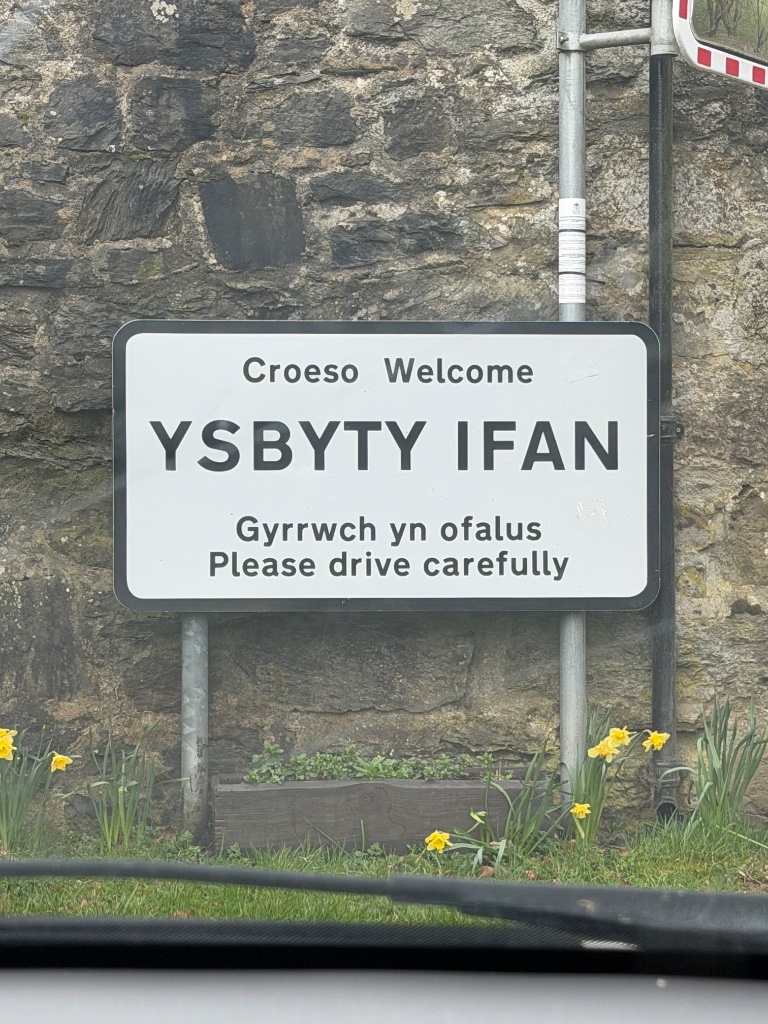
Welsh appears alongside English on all road signs in North Wales. Here are the most common ones you'll see:
| Welsh | English | |---|---| | Araf | Slow | | Gofal | Caution / Care | | Plant | Children | | Croeso i | Welcome to | | Allan | Out / Exit | | Mewn | In / Entrance | | Toiledau | Toilets | | Pwynt eithaf | Dead end | | Rhodfa | Pedestrian crossing | | Dim mynediad | No entry | | Gwynt cryf | Strong winds |
Place Name Elements
Welsh place names are wonderfully descriptive — once you know the building blocks, you can read the landscape:
- Aber — river mouth (e.g., Aberystwyth = mouth of the Ystwyth)
- Betws — prayer house / chapel (Betws-y-Coed = prayer house in the woods)
- Bont — bridge (Pont-y-Pant = bridge over the hollow)
- Bryn — hill (Brynteg = fair hill)
- Caer — fort (Caernarfon = fortress in Arfon)
- Capel — chapel (Capel Curig)
- Cwm — valley (Cwm Idwal)
- Dol — meadow (Dolgellau)
- Ffordd — road
- Llan — church or parish (Llandudno = church of Tudno)
- Maes — field (Maesglas = green field) | Mawr — big / great (Yr Wyddfa = Snowdon, Pen y Fan = top of the peak)
- Pentre — village
- Pont — bridge (Pontcysyllte = bridge of Cysyllte)
- Porth — harbour (Porthmadog)
- Traeth — beach (Traeth Llyfn = smooth beach)
- Ty — house (Ty Coch = red house)
- Ynys — island (Ynys Mon = Anglesey)
Food & Drink
You'll see these in cafes, pubs, and menus across North Wales:
| Welsh | English | |---|---| | Cwrw | Beer | | Gwin | Wine | | Dwr | Water | | Teisen | Cake | | Bara | Bread | | Bara brith | Speckled bread (fruit loaf) | | Caws | Cheese (as in Caws Pobi = toasted cheese) | | Cawl | Traditional Welsh stew | | Wyau | Eggs | | Menyn | Butter |
Useful Phrases
A few phrases that will delight locals if you give them a go:
- Dw i'n dysgu Cymraeg — I'm learning Welsh (doo in dus-gee kum-raig)
- Mae hyn yn braf — The weather is nice (my hin un brav)
- Ble mae'r... — Where is the... (ble mair)
- Sawl...? — How much / How many...? (sowl)
- Allwch chi helpu fi? — Can you help me? (ath-ookh khee hel-pee vee?)
- Dw i'n hoffi... — I like... (doo in hoff-ee)
The Letter That Stumps Everyone: Ll
You'll see the letter combination Ll everywhere (Llanelli, Llandudno, Llangollen). It's a unique Welsh sound — place your tongue as if to say 'L', then blow out the side of your mouth. Think of it as a 'tl' or a breathy 'thl' sound. Don't worry if you can't nail it — locals will appreciate the effort!
Other Letters & Sounds
- Ch — as in the Scottish 'loch' (e.g., Diolch)
- Dd — a soft 'th' as in 'the' (e.g., Dda = good)
- Ff — as in 'off' (e.g., Ffordd)
- F — pronounced as English 'v' (e.g., Afon = river)
- W — can be a vowel, like 'oo' (e.g., Cwm)
- Y — usually sounds like 'uh' (e.g., Y = the)
- U — sounds like 'ee' in North Wales dialect
A Bit About the Language
Welsh is a Celtic language, more closely related to Breton and Cornish than to English. It has around 750,000 speakers and is an official language in Wales. In North Wales, particularly in areas like Gwynedd and Anglesey, you'll hear it used naturally in shops, schools, and on the street. The Welsh Government has a target of one million Welsh speakers by 2050.
Top Tips for Visitors
- Don't worry about pronunciation — locals love it when visitors try, and will happily help.
- Say 'diolch' — it goes a long way in shops and cafes.
- Download an app — apps like Duolingo and SaySomethingIn Welsh are great for learning basics before your trip.
- Watch the signs — many place names tell you exactly what's there (Bettws-y-Coed really does mean 'prayer house in the woods').
- Listen to Radio Cymru or watch S4C — immerse yourself in the language during your stay.
Embrace the Language
Welsh isn't just words — it's the living heartbeat of North Wales. Every sign, every greeting, every song carries centuries of history. By learning even a few words, you're connecting with the culture in a meaningful way. So give it a go — pob lwc! (good luck!)
Disclaimer: Prices, opening times, and postcodes shown on this page are sourced from third-party sources and may change without notice. Please check with individual locations before planning your trip. stayinnorthwales.co.uk accepts no responsibility for any incorrect information.